FALL 2025
National KDSAP Website Redesign
I. OVERVIEW
As a part of the National Communications Committee for the Kidney Disease Screening and Awareness Program (KDSAP), I led the redesign of the national website to create a more user-friendly, efficient, and visually cohesive interface. The project aimed to enhance the navigation experience for students, community members, and the general public while amplifying KDSAP’s impact in kidney health education and outreach.
II. DEFINING NEEDS
General Public
For potential attendees of the screening or community leaders interested in hosting a collaboration with a KDSAP chapter, the website needed to convey credibility, impact, and trust of our efforts.
Students
The website needed to provide information to any prospective students interested in joining the club, emphasizing the size and impact of the organization while conveying the career development opportunities and clinical experiences.
Chapters
Chapters and current members need to be able to use this a common sharing platform for health education and other digital resources. It also would help facilitate communication between chapters.
III. the problem
Unorganized Hierarchy
Several pages contained closely related information that could be condensed to improve clarity. The navigation bar also needed to be redesigned.
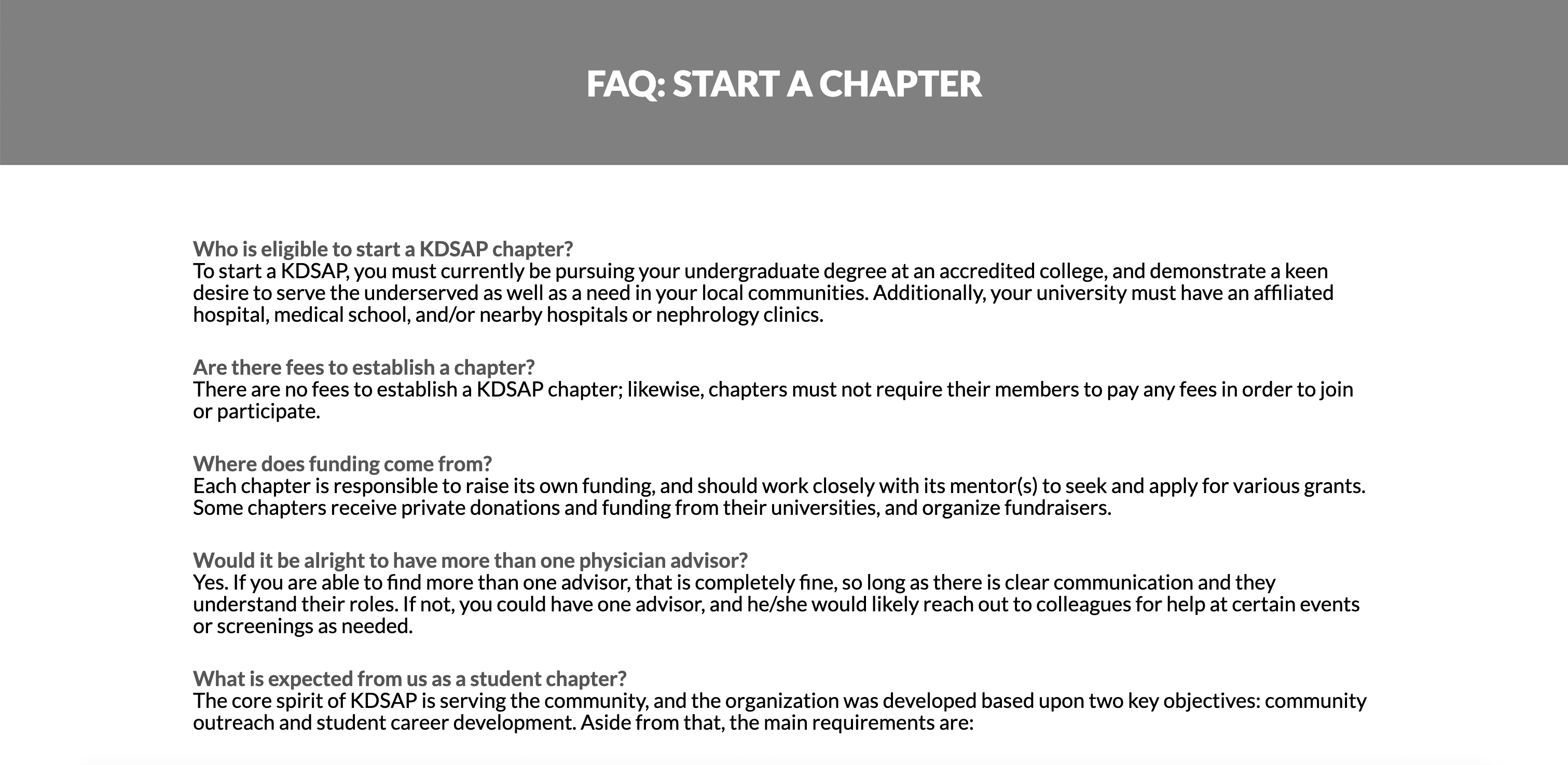
Cluttered pages
Several pages with necessary information (screening, training, starting a chapter) were in FAQ format. This makes it hard for readers to find what information they're searching for.
Unaccessible Resources
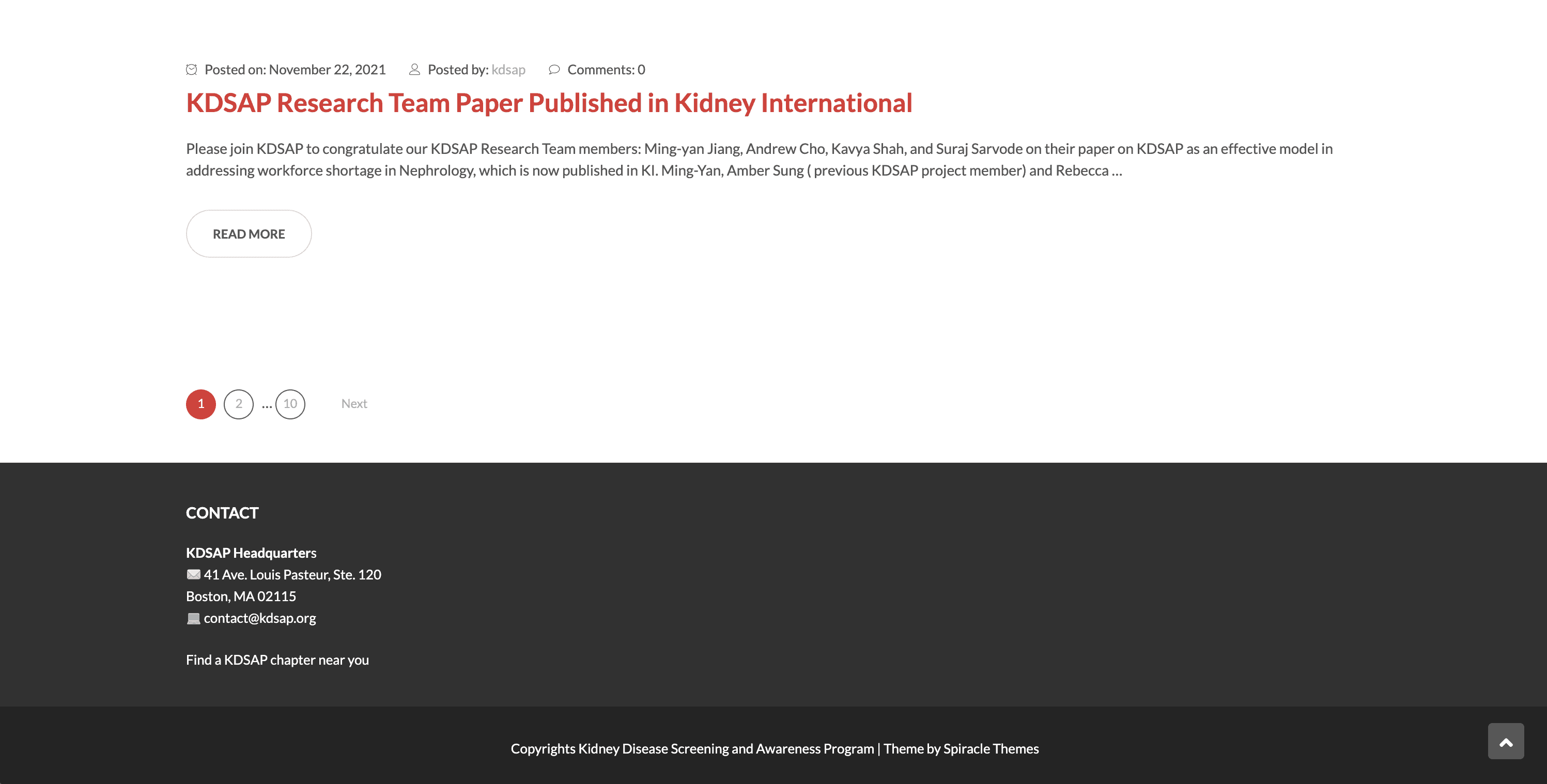
Health education resources, audio transcripts, and videos were simply linked in an unattractive way that did not preview or show the user what kind of information they contained.
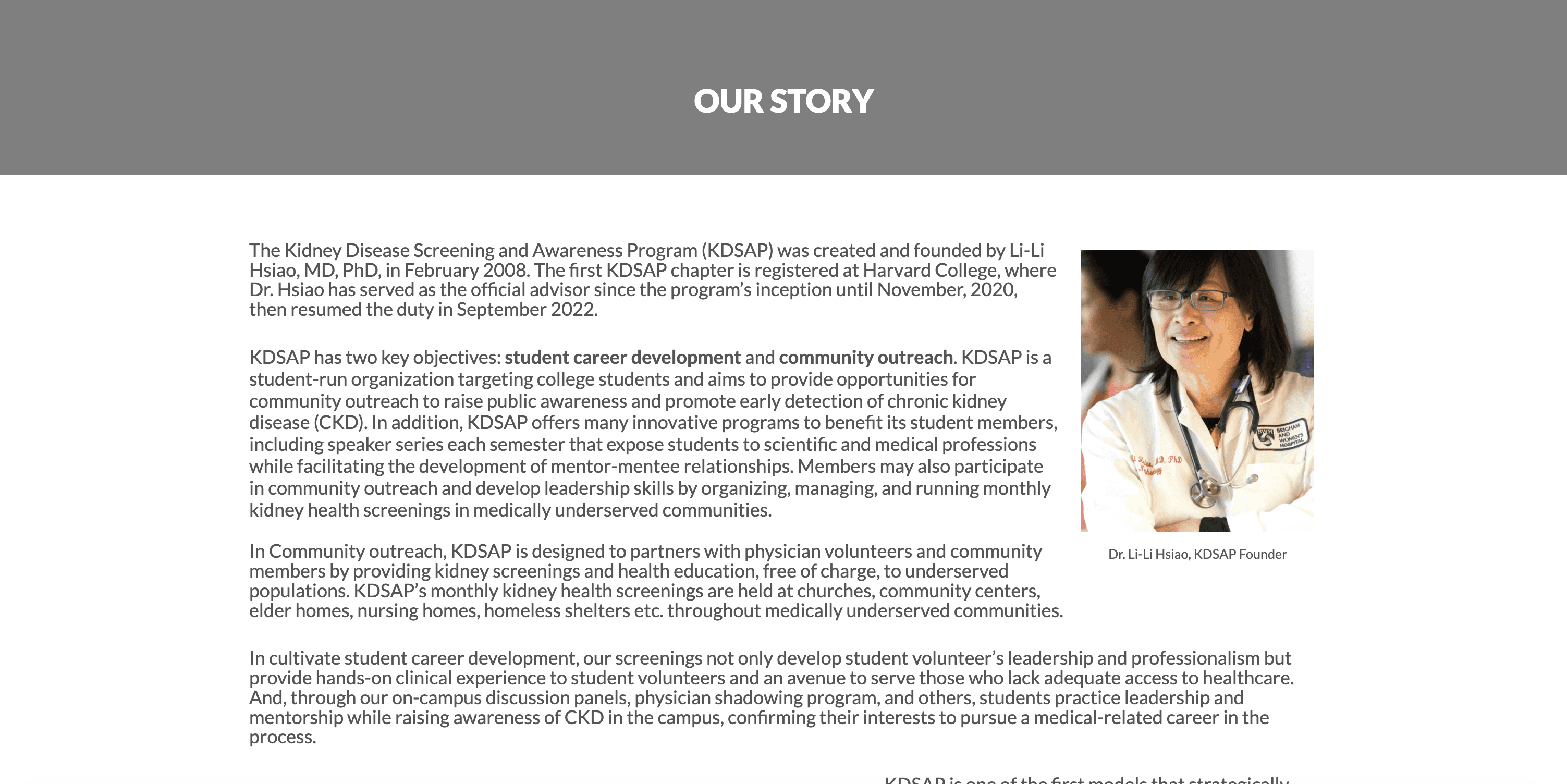
Unorganized Hierarchy
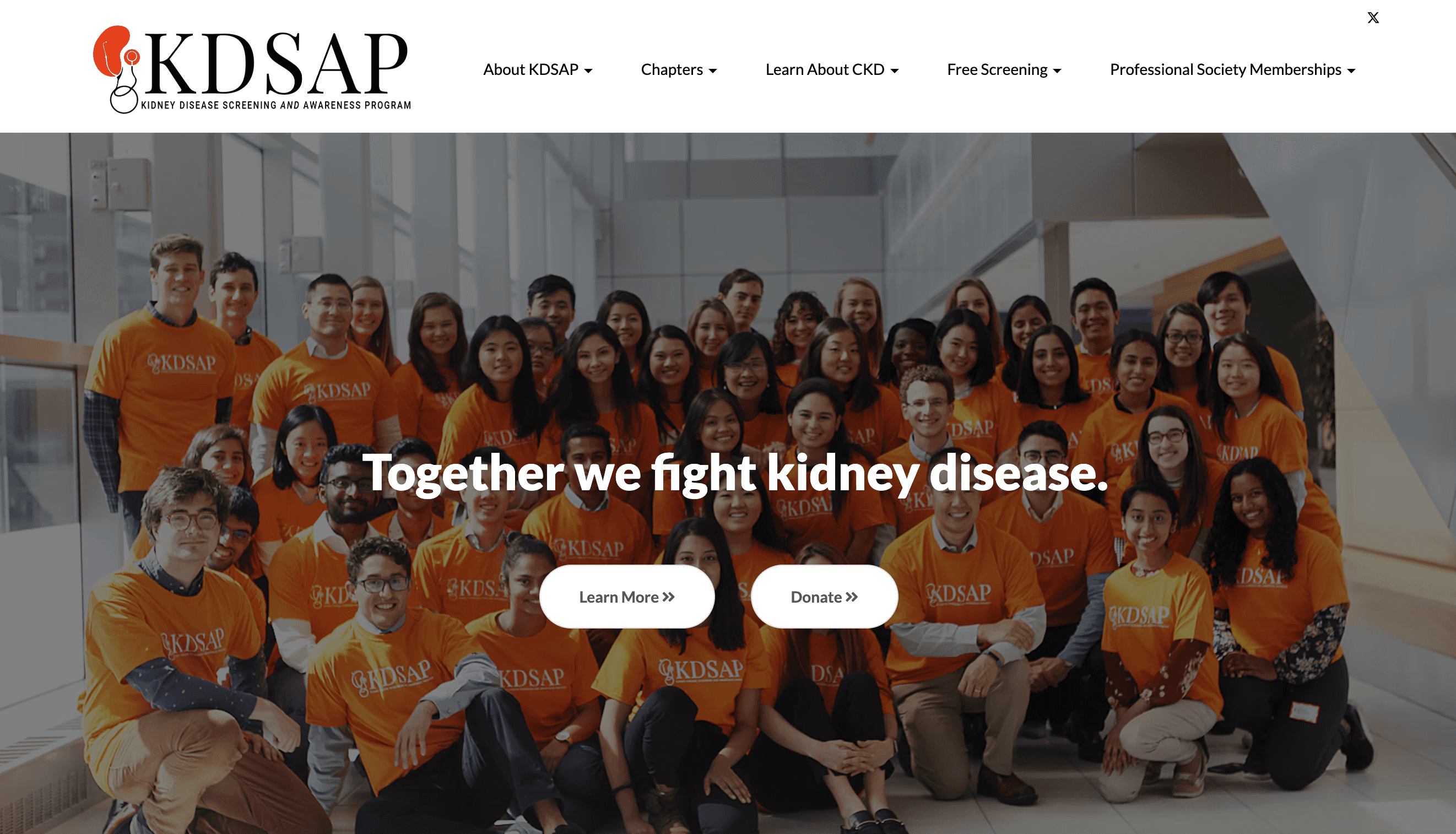
Several pages consisted of blocks of text that lacked visual hierarchy and contained redundant information. This increases the barrier between the audience becoming interested or motivated to learn more about the importance of CKD.
After discussing with my team and conducting design audit, I came up with three questions to focus on for the redesign:
How can we instill a sense of trust and credibility in community members who want to partner or attend a screening?
How can we make an emotional impact on the audience?
How can we emphasize existing resources to facilitate inter-chapter communication?
IV. BRANDING
KDSAP already has an established logo and brand color, so I sought to defined the color and typography based off this precedent. After looking through other branding from medical organizations (WebMD, Mayo Clinic, etc.), I chose a traditional serif font to convey credibility and to reflect the logo. I paired it with a more playful sans serif font for the body text.
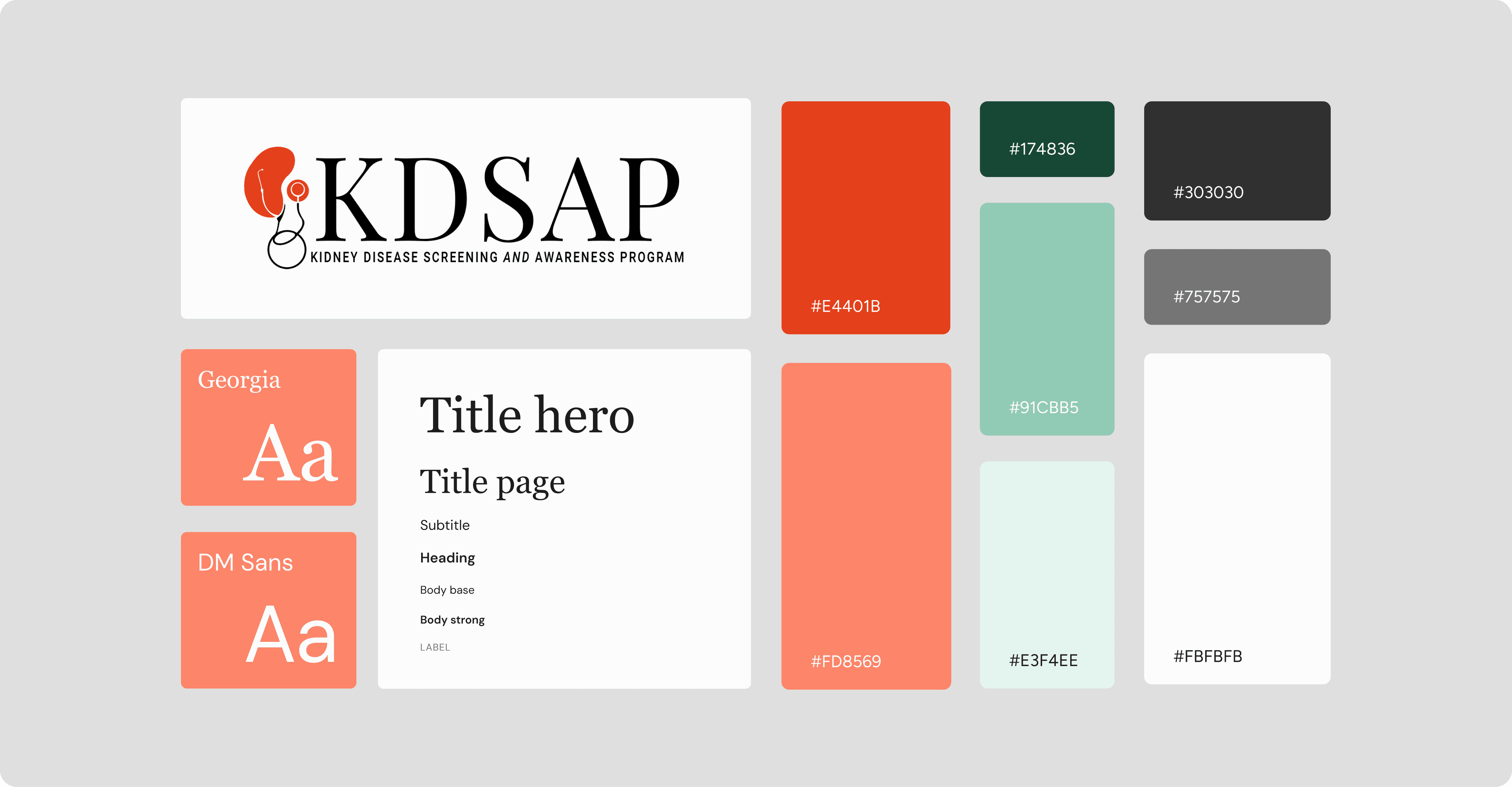
While deciding brand colors, the orange color was a non-negotiable as the brand color, since that is already widely used among all chapters. I added a complementary green as an secondary color so it wasn’t so monotonous.
V. FINAL DESIGNS
How can we instill a sense of trust and credibility in community members who want to partner or attend a screening?
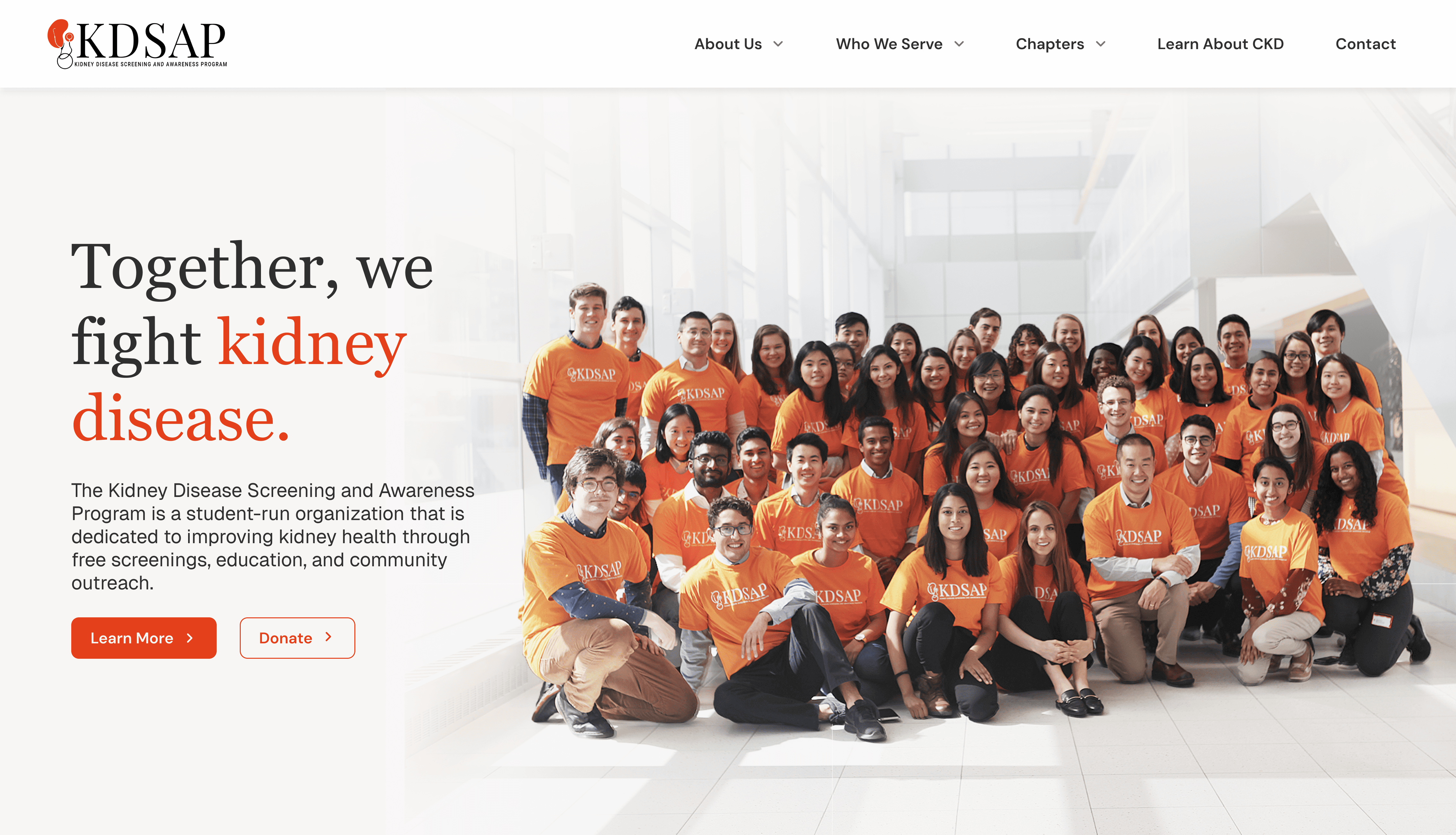
Home
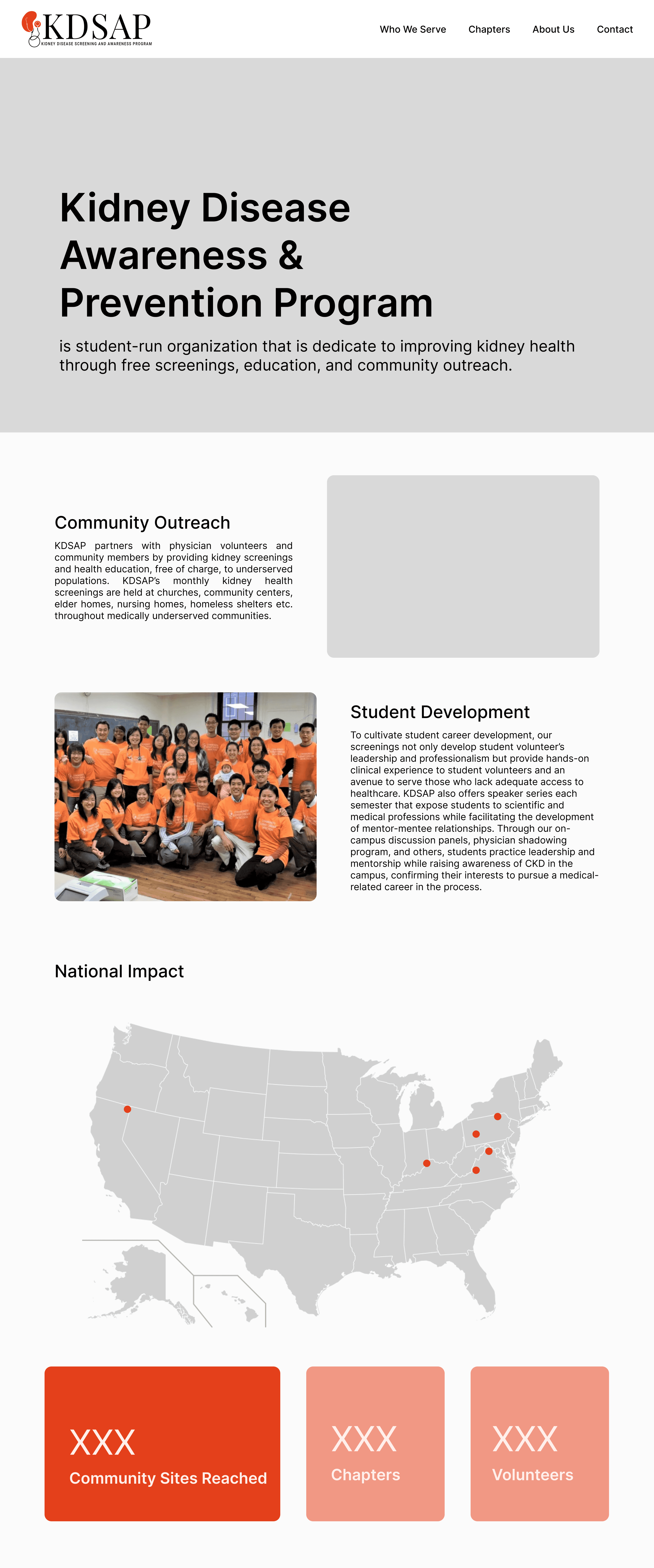
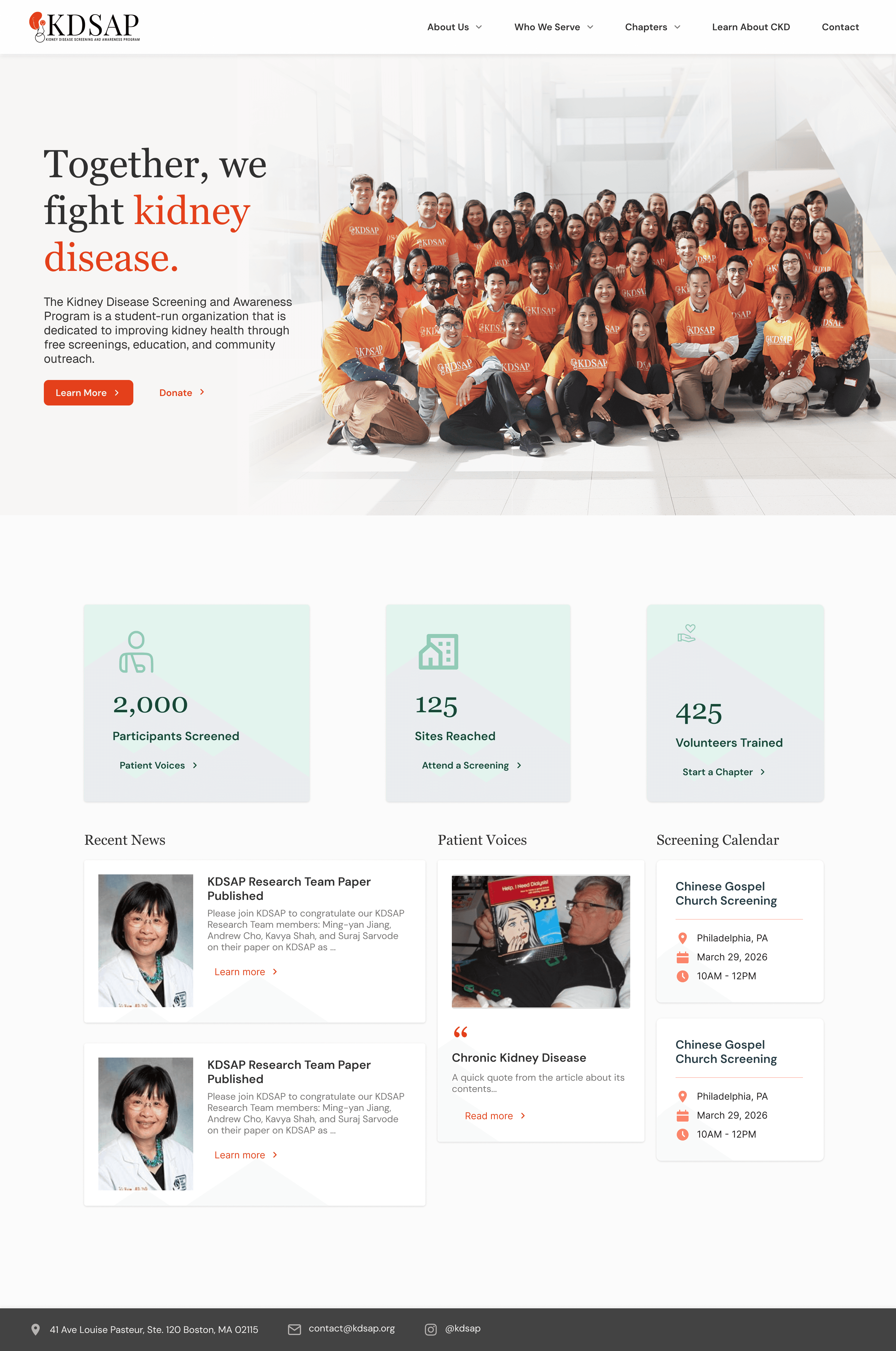
From the homepage, I wanted the audience our two main goals: 1. Community outreach, and 2. Student career development. To convey credibility and impact, I incorporated statistics to that emphasized the size and impact of our efforts. The homepage also draws the audience towards other pages on the website, such as recent news, about us, and how to start a chapter.

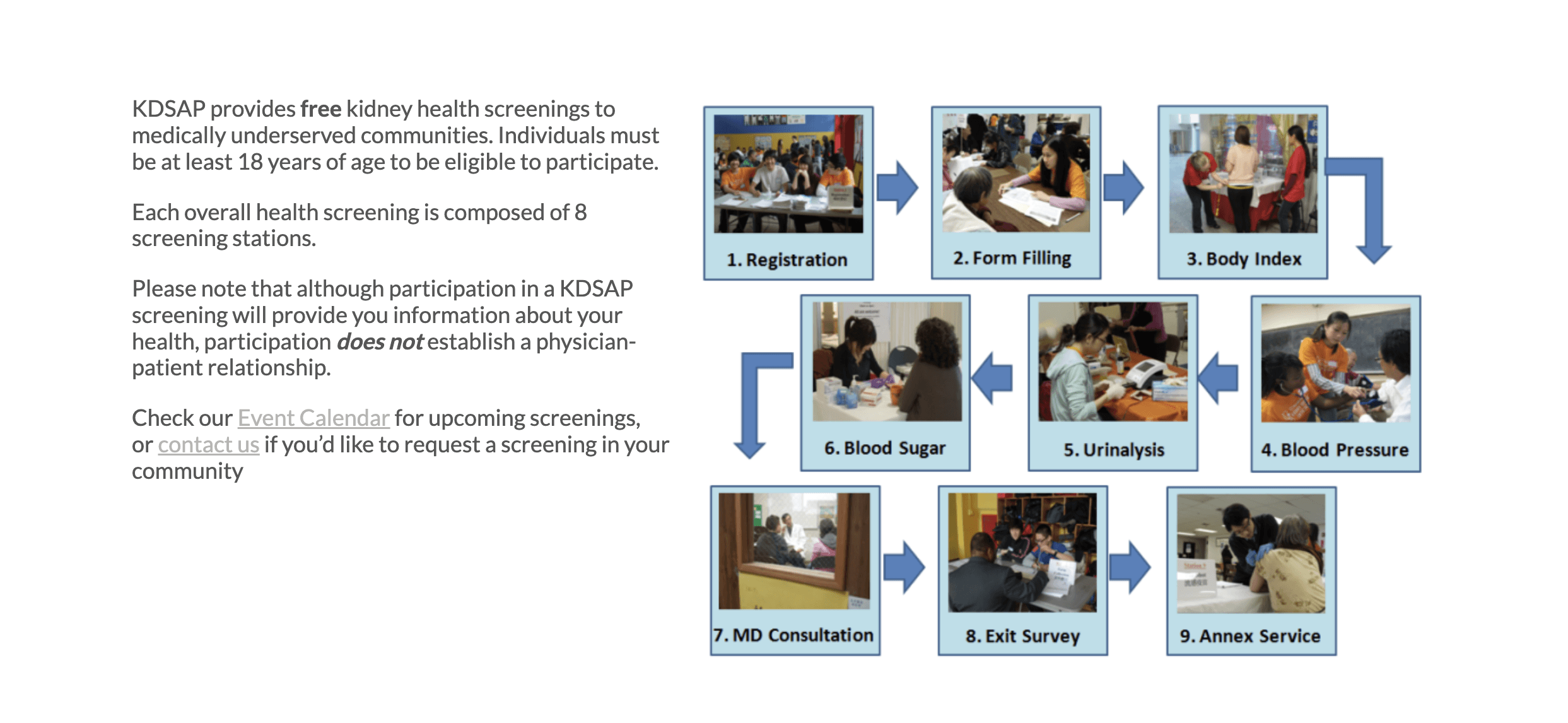
Attend our Screenings
The current diagram showing screening flow did it's job, but it didn't look visually appealing. I redesigned it to flow linearly as the user scrolls and added a one sentence description to summarize each stations' importance in the overall screening.
I also reserved a section to address data privacy concerns on the bottom, which was previously hidden among the FAQ pages, and made the options to Contact Us and Attend a Screening more visible to draw the audience towards other pages aferwards.
How can we make an emotional impact on the audience?
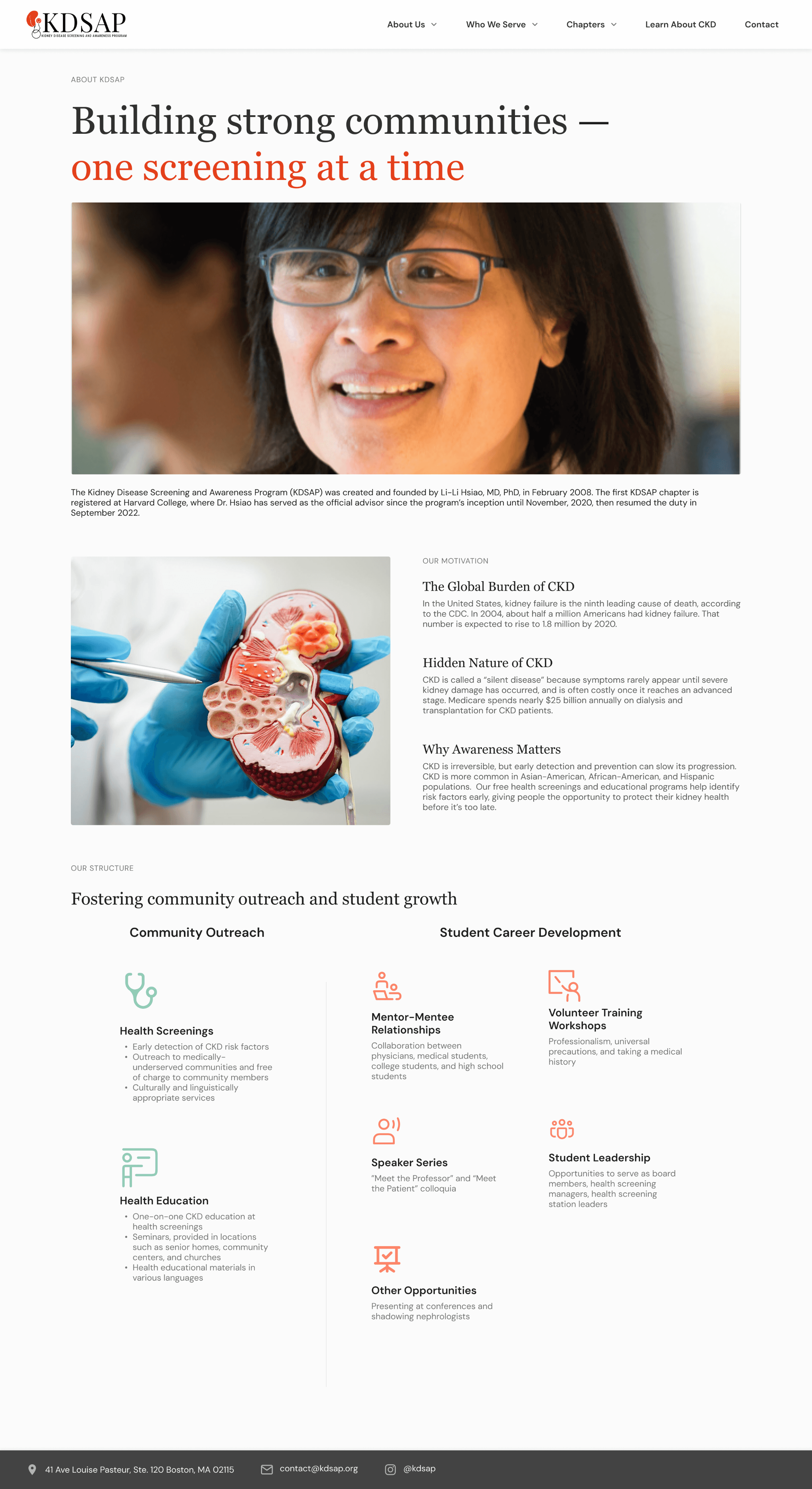
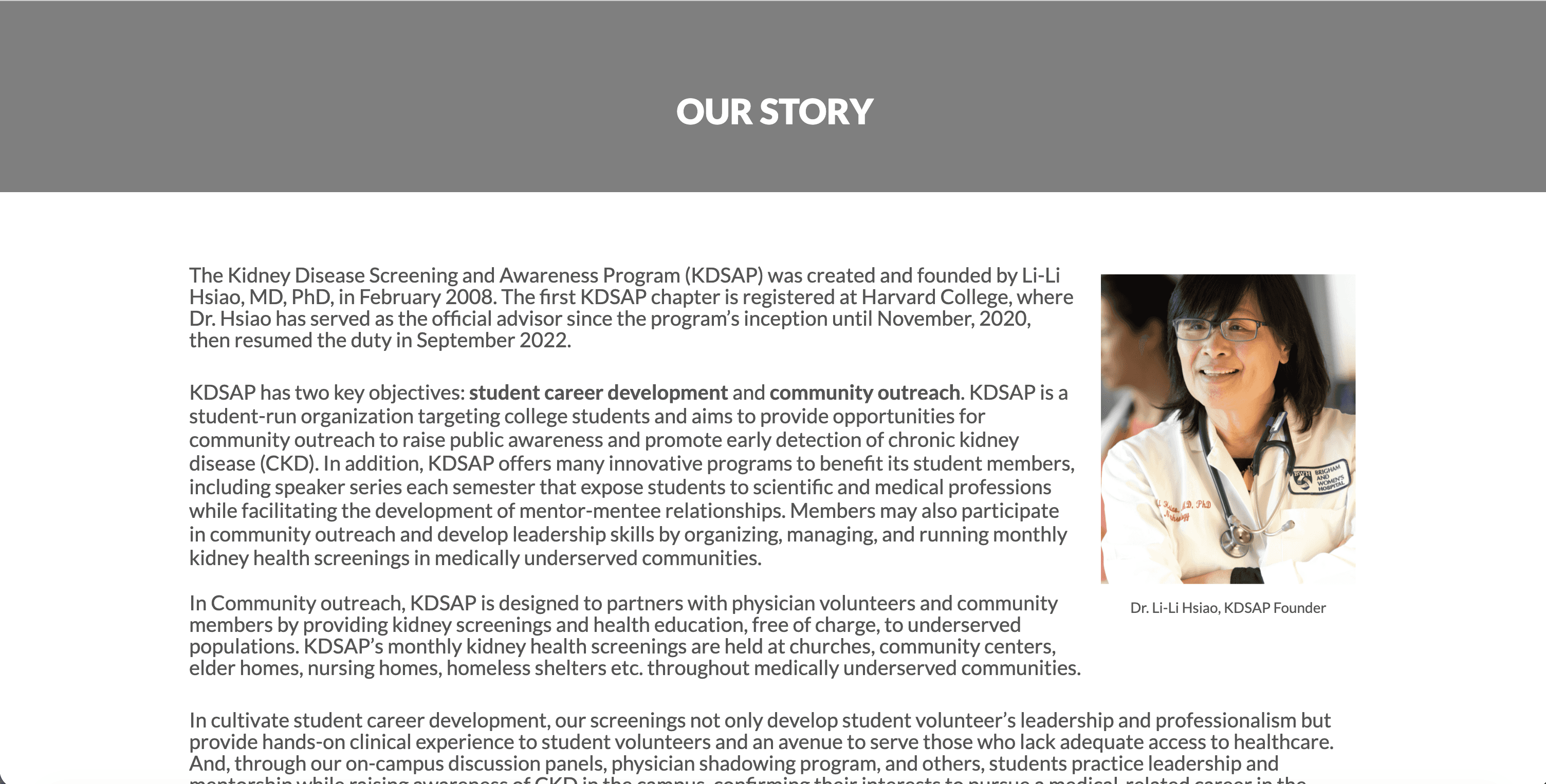
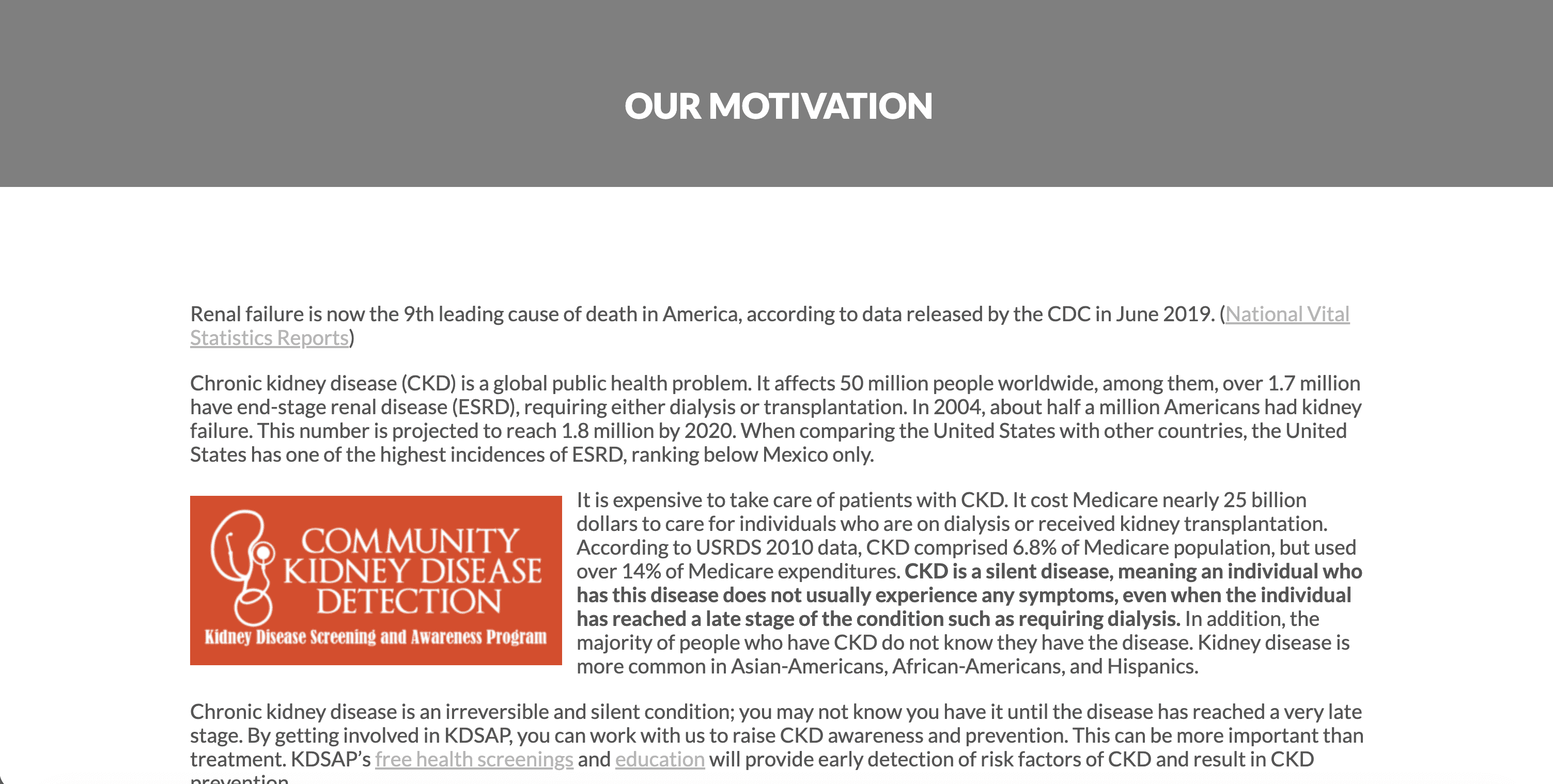
About KDSAP
I condensed the blocks of text into one page with a smoother flow and visual hierarchy so that readers could take away the most important part. I also added visuals for interest to break up the blocks of text.
Patient Voices
To establish more emotional connection with the audience, I wanted to highlight the stories of individuals who were impacted by chronic kidney disease (CKD). There were previously some PDF attachments with talks by dialysis patients, which I redesigned in a article-like format that made it easier to read. I also was thinking that it would be a great chance for chapters to send in stories from their own screenings. For example, our chapter had an impactful patient testimonial from somebody who found early detection of cancer through our screenings.
How can we emphasize existing resources to facilitate inter-chapter communication?
Health Education Resources
To promote the use of national resources and newsletters for all chapter to access and contribute to, I designed a page with better previews of the resources so that all chapters could take advantage.
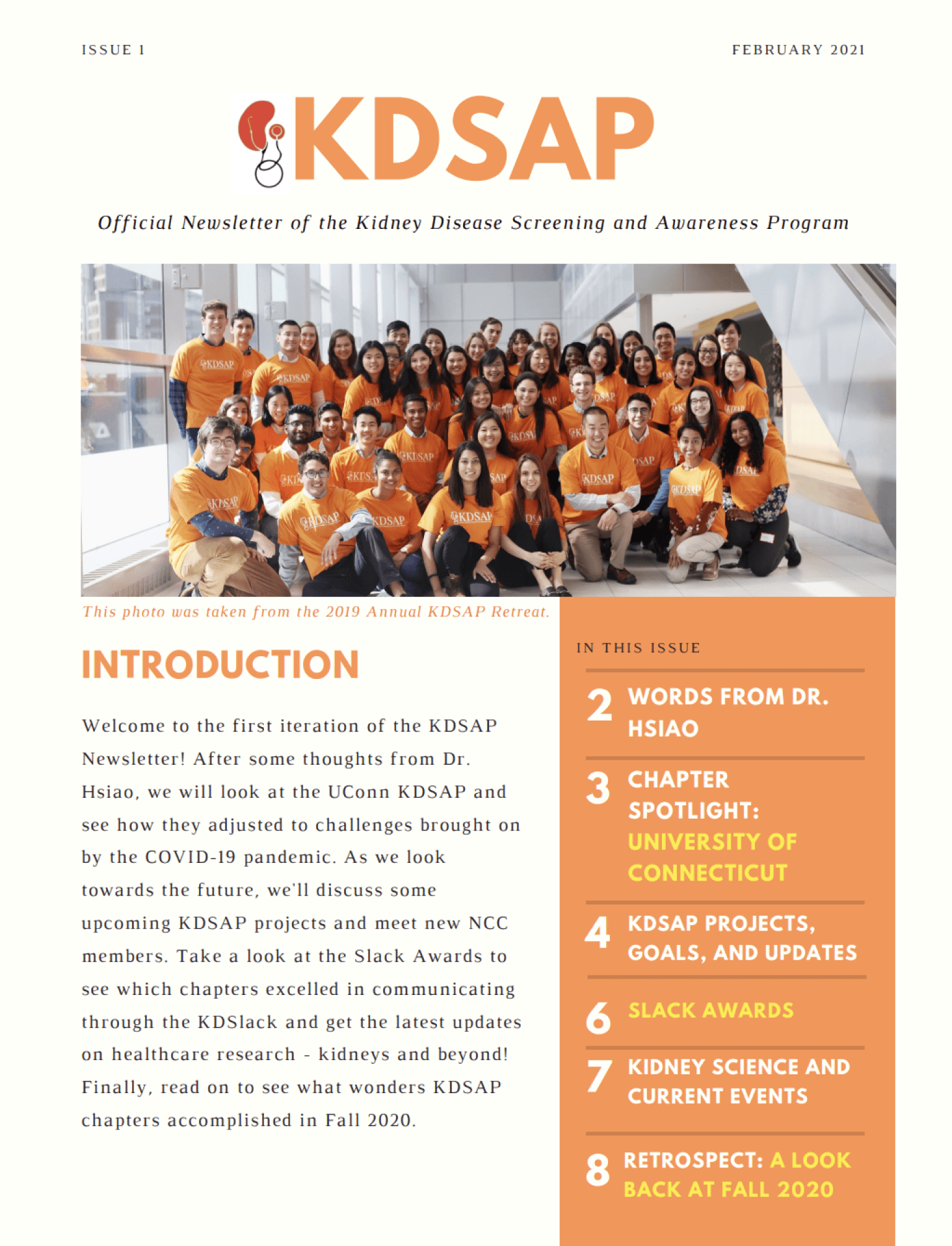
2021
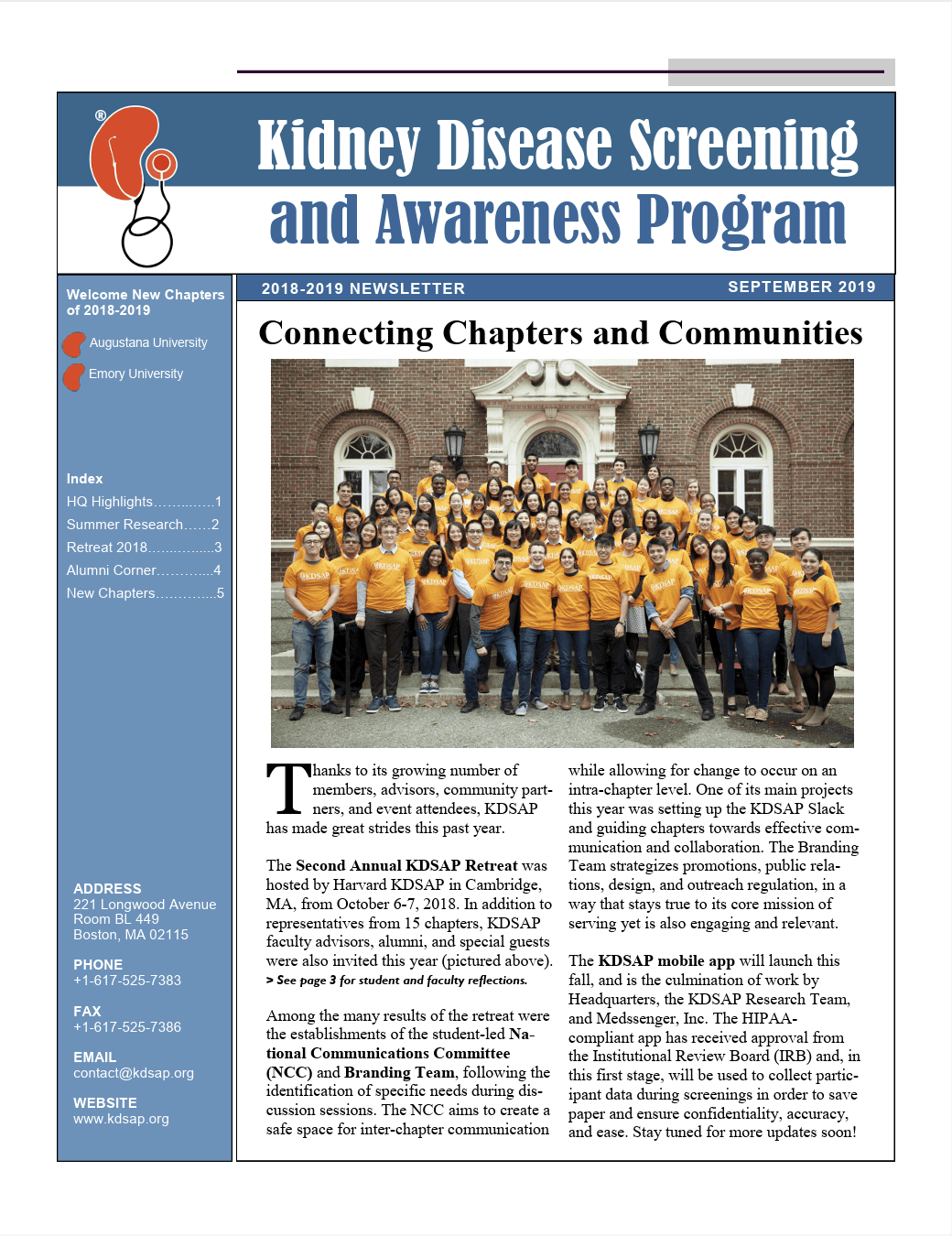
2018-19
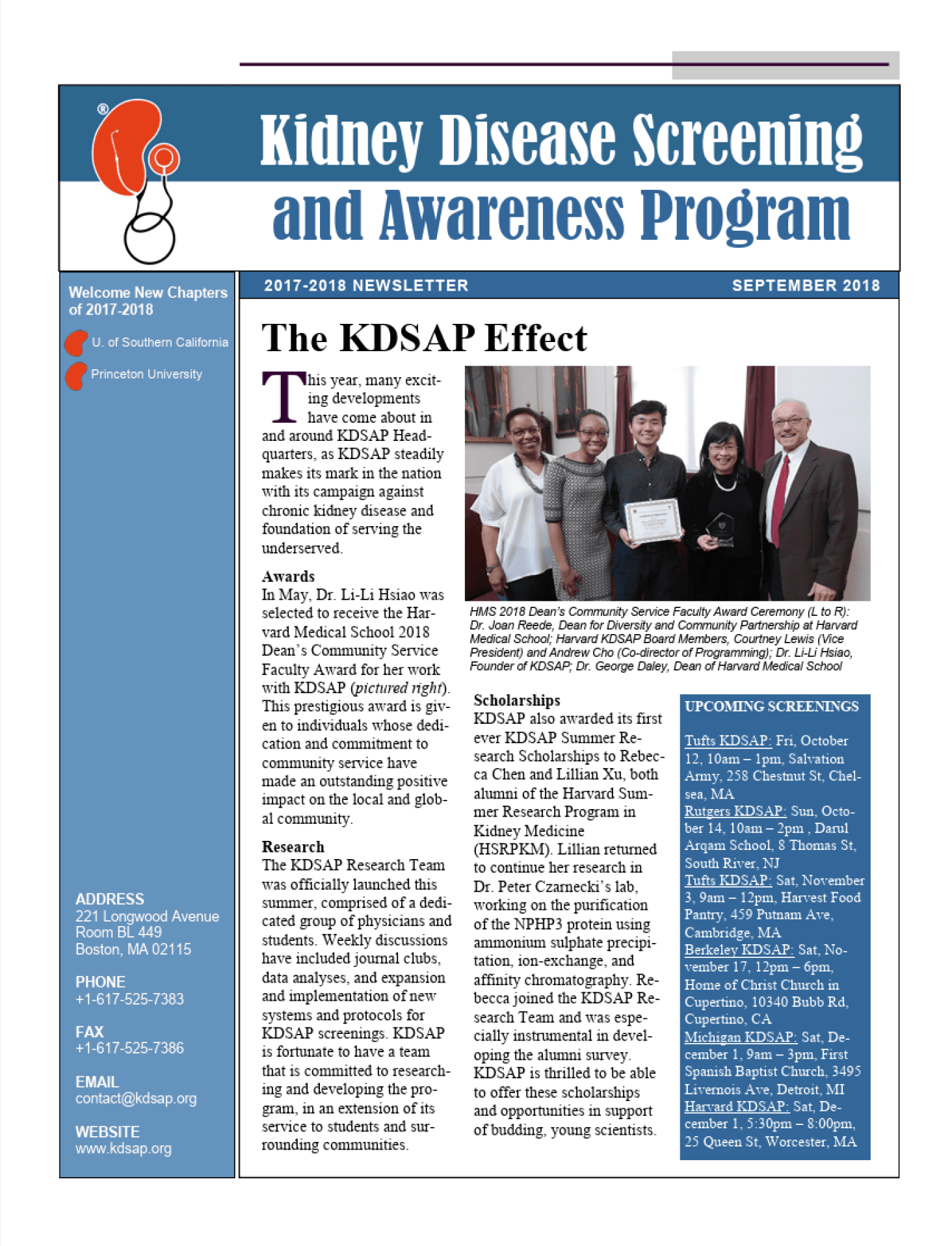
2017-18
Starting a Chapter
I converted the FAQ sections spread across 3 pages into one comprehensive page with visual hierarchy to guide students who are interested in creating a chapter.